Here's the lovely Maria Andres showing us the size of the biggest sets. Because of the light wind, conditions were actually much cleaner that what it looks. I gave it a 7.

4am significant buoy readings
South shore
Lanai
2.3ft @ 13s from 266° (W)
0.2ft @ 22s from 210° (SSW)
Buoy still feeling the wrap of the current swell and a lovely 0.2f 22s from SSW that could be indication of something small to play with over the weekend.
North shore
NW101
NW101
4.5ft @ 11s from 316° (NW)
3.3ft @ 10s from 335° (NNW)
Waimea
3.5ft @ 13s from 322° (NW)
1.5ft @ 10s from 317° (NW)
Pauwela
3ft @ 6s from 80° (E)
2.4ft @ 13s from 323° (NW)
2.1ft @ 9s from 44° (NE)
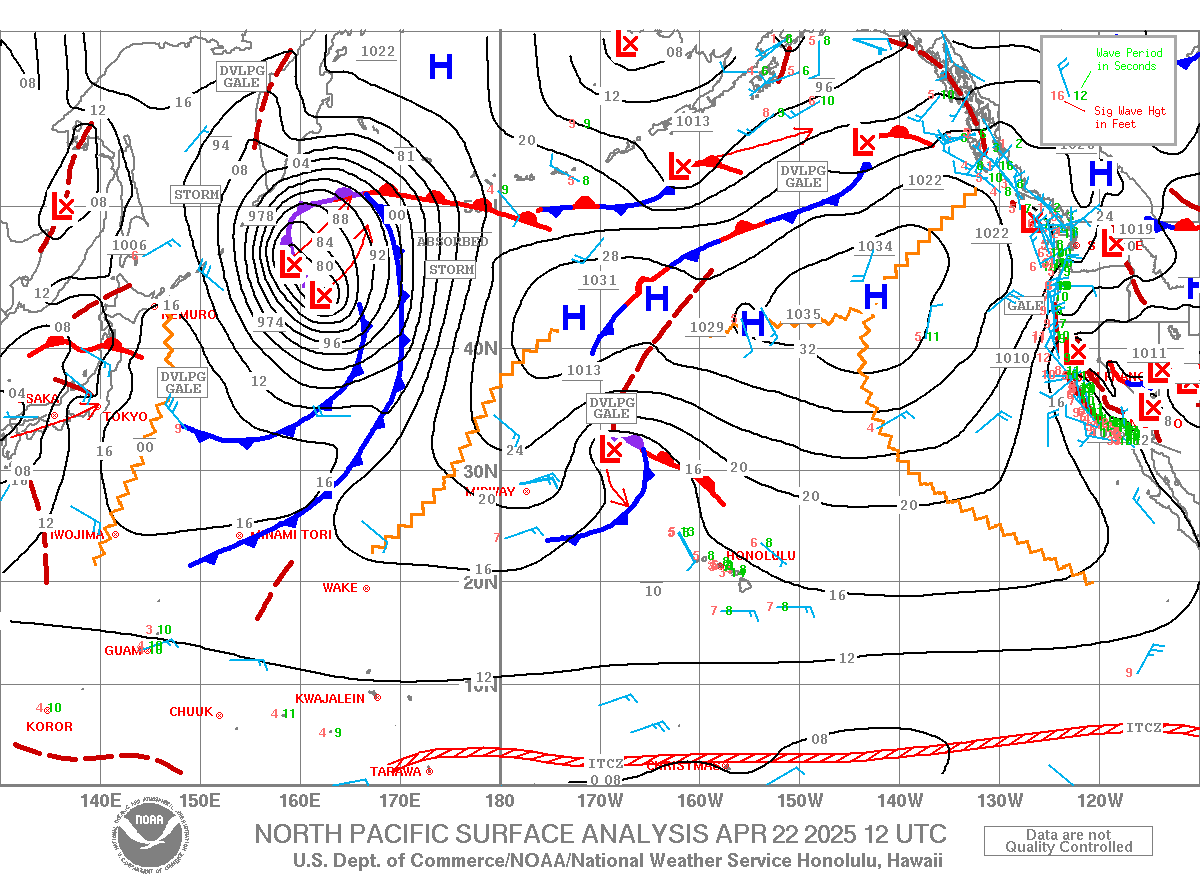
Current swell still hanging in there (yes, if the fetch lasts 5 day, the swell lasts 5 days (or more) too). Numbers are small, I'm guessing head high in the bigger sets. Should stay pretty steady during the day, maybe going down a bit with the period, judging by the NW101 readings. Stay tuned for the beach report.
As we know, there's a large swell about to knock on the door and I'm going to take the opportunity to explain once again, despite the fact that I already talked about it in this post, how I use the Surfline forecast. The two links for north and south are n.15 and 14 in GP's list in the right column of this blog. Below is the north forecast (I can only show you the first three days, the rest of it requires subscription) and you get that with clicking on link n.15 and scrolling down a bit.
My opinion about that is: useless. The page is called "Maui North Regional Forecast" and assuming those are wave faces heights and focusing on the last one for Sunday, I'd like to know where exactly it is going to be 12 to 14 feet. Is that Hookipa, Paia bay, Kanaha or Jaws? Those four spots, just mention some, are going to be extremely different in size in fact. If you hover with the mouse over that red circle it actually gives you the forecast of the open ocean swells and, as we are also about to learn with the next picture, the big swell is forecasted as 11f 16s from 309 at that time. Whatever formula they use to put 12 to 14 faces is totally wrong. There is no such a formula that is right. It depends enormously on the particular spot.

But it only takes one more click on the offshore swells tab (indicated by a red arrow in picure above) to get all the information you need. The picture below is what shows all the open ocean swells and if you hover with the mouse over that late Sunday time, you get what I wrote in red. Warning: this graph does not show with my IE, I need Firefox for it. And it might not be smart phone friendly, but I've seen the Surfline app and that is totally useless too.
Now, if every day you check the buoys to see what's in the water (that's the link n.11) and then compare it to what you see at your spot of preference, in a matter of a couple of weeks, you'll start having a pretty good idea of what any combo of size, period and direction does to it. The more you do it, the more your knowledge of that spot increases and you won't need no more useless forecasts that try to predict the size of the waves at any spot.
Now, if every day you check the buoys to see what's in the water (that's the link n.11) and then compare it to what you see at your spot of preference, in a matter of a couple of weeks, you'll start having a pretty good idea of what any combo of size, period and direction does to it. The more you do it, the more your knowledge of that spot increases and you won't need no more useless forecasts that try to predict the size of the waves at any spot.

MC2km map at noon shows a hell lot of wind. Fortunately, the Hookipa sensor only reads 4(3-6) mph from 93 at 6am, so dawn patrol should be ok.

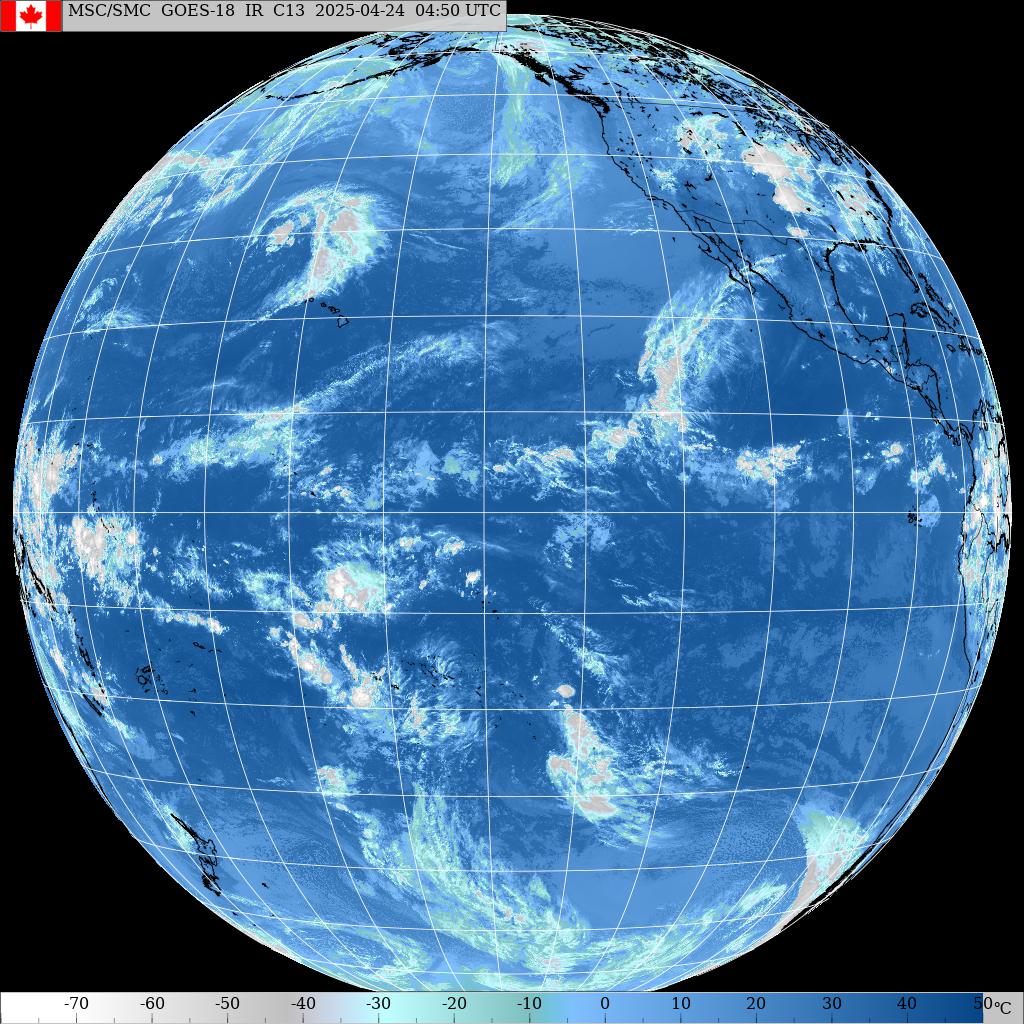
Looks like some clouds, but I'm not a cloud reader.

Current wind map shows:
1) the strong NW fetch still accumulating water molecule after molecule on top of each other.
2) the head of a fetch down under.

I wanted to investigate better on the down under fetch and I scrolled the map to show it better and a monster long one showed up. This morning I have no time to try to figure out if that fetch is oriented towards us or not. Don't forget that maps try to represent in two dimensions something that instead has three, and down by the poles the Earth curvature will introduce an even bigger mistake when represented flat. But the Surfline forecast shows 3f 15s next Friday/Saturday, so we are gonna get something.